
Request an appointment
No referral needed. A real person calls you back, usually within two business hours.
Connellsville, PA · Services
Therapeutic ultrasound in Connellsville.
An old tool with a narrow job: a few minutes of warming or settling an area, used selectively inside a plan, and never the reason anybody gets better. This page is going to be straight with you about that.
What is therapeutic ultrasound in Connellsville?
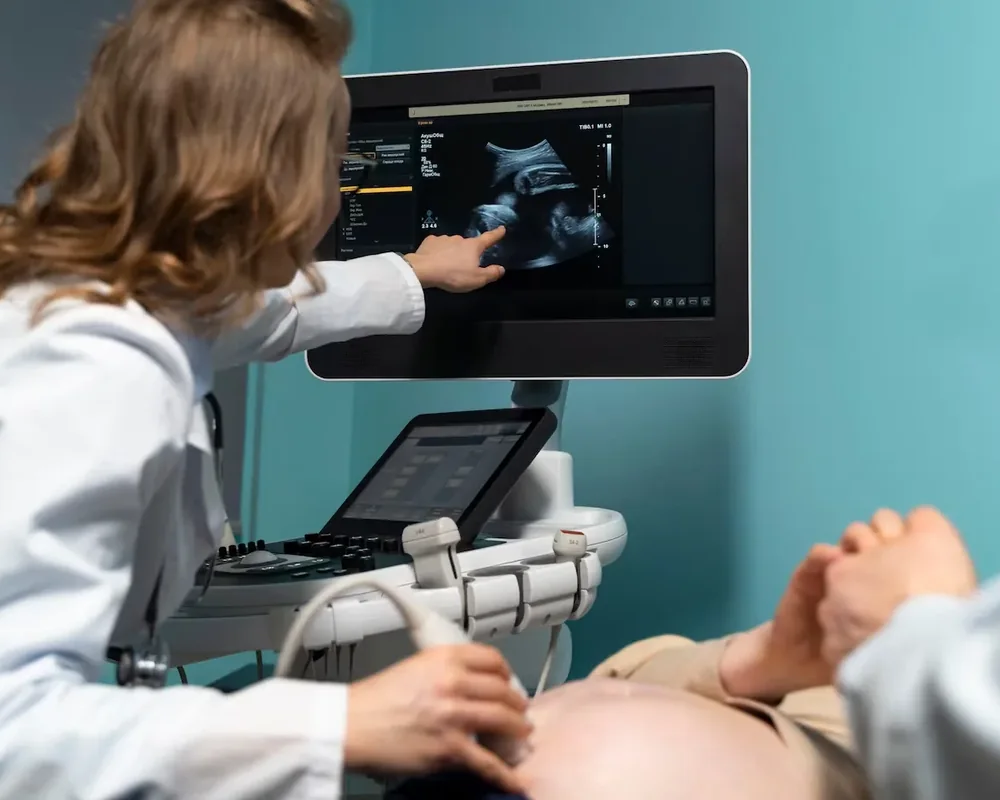
Therapeutic ultrasound sends sound waves into tissue through a handheld sound head and a layer of gel. It has been in physical therapy clinics for decades. Depending on the settings, it is used either to warm tissue at depth ahead of hands-on work, or in a pulsed mode aimed at an area that is irritable rather than stiff. You feel the gel, you feel the head moving, and sometimes you feel a mild warmth. That is the entire experience.
Now the part most pages skip. Therapeutic ultrasound is a small adjunct with a narrow set of uses. It has been asked to do far more than it can over the years, and the honest position is the one we will hold to here: it is used selectively, briefly, and only when there is a specific reason. It is not the reason anybody gets better. We will not put a percentage or a success rate on this page, because none we could stand behind has been supplied. A page that admits what a tool cannot do is worth more to you than one that oversells it.
Like everything else in this section, it lives inside a cause-first evaluation and a plan that runs the four named phases: Pain, Prime, Perform, and Prevent. When it appears at all, it is usually a few minutes in Pain or Prime, ahead of the hands-on work it is meant to make more productive. Your licensed physical therapist will tell you at the evaluation whether it fits your plan at all, and on most plans here it does not.
Calm it down.
Hands-on treatment begins at the first visit. You leave understanding what’s actually going on, and you feel a difference early.
Restore what’s stuck.
Targeted mobility work for the joints and tissue actually holding you back, dosed to your body, not a printed sheet.
Build strength you trust.
Progressive load against standards you have to clear before moving on. Confidence, here, is a training effect.
Make it stay fixed.
Testing before you’re cleared, then a keep-it-gone program sized to your real week. Then we graduate you.
What is therapeutic ultrasound commonly used for?
Ultrasound is considered for a short list of situations, always as a lead-in to the work that follows it in the same hour. A sample of where it occasionally has a job:
Shoulder pain ⟶
Warming stiff tissue at depth so the mobilization that follows has somewhere to go.
02Elbow, wrist & hand pain ⟶
A tendon that is easier to work on once the area around it has been warmed.
03Foot or ankle pain ⟶
A tight, tender heel cord ahead of the mobility work in the same visit.
04Pre and post surgery ⟶
Scar tissue being prepared for the hands-on work that comes directly after it.
The real cost of an oversold modality is time. Weeks of visits can pass pleasantly while the strength work that keeps the problem from returning never quite starts, and the thing that brought you in is still there in the spring. Ultrasound gets a few minutes here because a few minutes is what it is worth, and the rest of the hour goes where it counts.
What does a therapeutic ultrasound session look like?
It is a few minutes inside a normal visit. Your licensed physical therapist puts gel on the skin, moves the sound head in slow, continuous circles over the target area, and sets the intensity and the mode for the job in front of them. The head keeps moving the entire time. If it ever parks in one spot, that is wrong, and you should say so.
Most patients feel nothing beyond the cool gel and the movement of the head. Some feel a mild warmth at depth. Anything sharp, hot, or uncomfortable is not part of it, and it means the settings need to change or the treatment needs to stop. There is no downtime and nothing to manage at home afterward.
Then the visit gets on with itself. Ultrasound is scheduled as a lead-in, so the hands-on work and the loading follow directly, in the same session, while the area is still warm. Used that way it earns its few minutes. Used as the visit, it would be a waste of your hour, and you would be right to be annoyed about it.
Who therapeutic ultrasound is for, and who it isn’t.
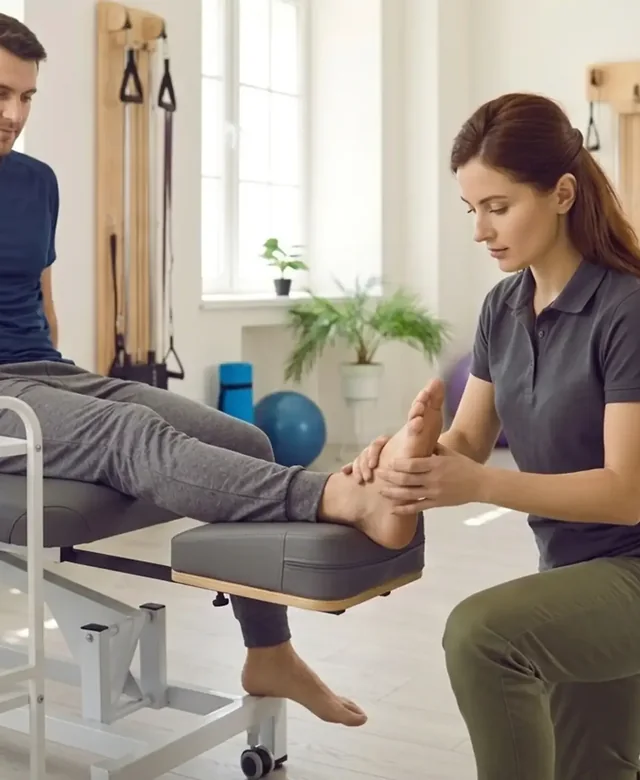
Ultrasound fits a narrow group: patients already inside a plan, with a specific area a therapist wants warmed or settled before the hands-on work in that same visit. Most plans here never use it at all. That is not a shortage of equipment. That is what the tool is worth, said out loud.
If you had ultrasound at another clinic once and left quietly wondering whether the gel did anything, that was a fair question and you were right to ask it. What you deserve is a therapist who will tell you plainly when a tool has a job and when it does not, rather than one who bills for it either way.
It is screened for, like everything else. Ultrasound is avoided over known or suspected malignancy, over the abdomen or low back during pregnancy, over the eyes, over a pacemaker or other implanted electronic device, over active infection, and over the growth plates of children. Recent fractures, areas with impaired sensation or circulation, and a known blood clot in the region also rule it out. Your licensed physical therapist checks all of that before the sound head touches your skin.
Good fit
- Already inside a plan, with a specific area to warm or settle first
- Used as a lead-in to the hands-on and loading work in the same visit
- Comfortable with a tool measured in minutes, not in sessions
- Fine with hearing that your plan may not use it at all
Not the right fit
- Over known or suspected malignancy, a pacemaker, or an implanted device
- Over the abdomen or low back during pregnancy, or over the eyes
- Over the growth plates of children, active infection, or a recent fracture
- Impaired sensation or circulation, or a known blood clot in the region
- Anyone hoping a course of ultrasound will stand in for the strength work
What therapeutic ultrasound works alongside.
The few minutes exist to set something up. These are the things they set up, and they are the ones doing the work.
Manual Therapy ⟶
The hands-on work the few minutes are meant to set up.
02Laser Therapy ⟶
The other adjunct in the same drawer, with the same modest job description.
03Astym ⟶
Instrument work on tissue that has stopped gliding, when warming alone won’t do it.
04Physical Therapy ⟶
The evaluation and the plan that decide whether it is used at all.
“Amazing staff and walked out with 0 pain! I would highly recommend this place to anyone who needs physical therapy.”Kylie H. · Patient review
Therapeutic ultrasound questions, answered plainly.
It has a narrow set of uses and it is used here selectively. We are not going to quote you a figure, because none we could stand behind has been supplied. Many patients report that a warmed area is easier to work on, which is the specific job it is asked to do. It is a small adjunct, and it is never the reason a plan works.
No. Most patients feel the cool gel, the movement of the sound head, and sometimes a mild warmth at depth. Anything sharp or hot is not part of it. Tell your licensed physical therapist immediately if you feel that, so the settings can be changed or the treatment stopped.
Almost certainly not. On most plans here it is never used at all, and when it is used, it is a few minutes as a lead-in to the hands-on and loading work in the same visit. Your licensed physical therapist will tell you at your evaluation whether it fits your plan at all.
No. Ultrasound is not a standalone appointment here. It is a short block inside a regular physical therapy visit, used after a cause-first evaluation decides it has a specific job, and it is followed in the same session by the work that actually changes the outcome.
Start with the evaluation that decides what actually helps.
Put it in writing.
Six short questions. A real person calls you back, usually within two business hours, with times that fit your week.
The people who end up filling this out are rarely in the worst pain of their life. They’re just done working around it, done picking the errand that doesn’t require the stairs. If that’s the stage you’re at, this is the part where you stop researching and start.
Consider it filed.
A real person will call you back, usually within two business hours, with appointment times that fit your week. Keep your phone nearby.
Can’t wait? Call (724) 628-7288 ⟶Two clinics. Same standard in both.
Connellsville and Scottdale, both fully staffed, both easy to park at. Come see either one before you commit, if you like.
Clinic 01 · Connellsville
Directions to Connellsville ⟶ (opens in a new tab)
Clinic 02 · Scottdale
Directions to Scottdale ⟶ (opens in a new tab)