

Connellsville, PA · What we treat
Sports injuries in Connellsville.
Something went, and now the question is not whether it hurts but whether it is safe to go again. A cause-first evaluation works out what actually failed and why, then a plan with an endpoint takes you to a clearance you earned on a test rather than one you guessed at on a good day.
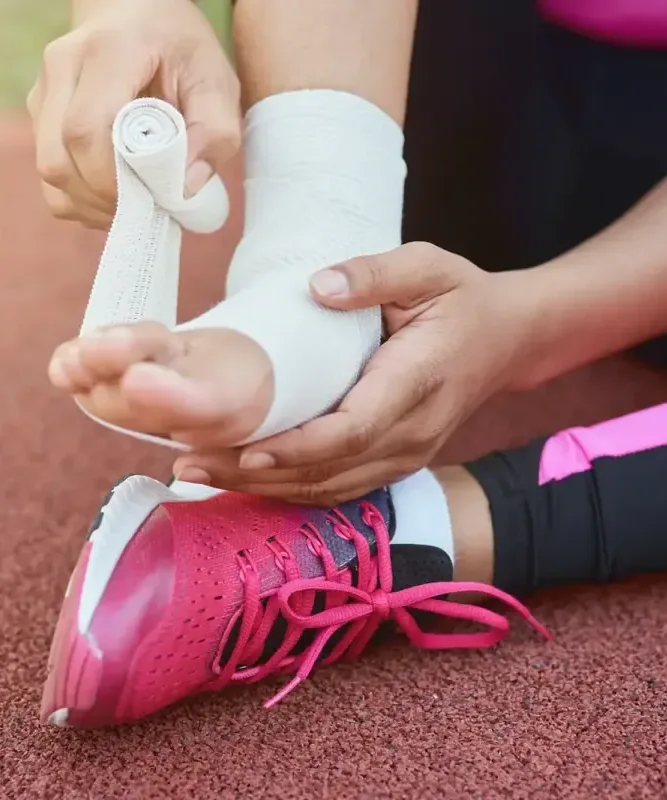
You’ve probably said one of these.
Nobody walks in citing a tissue grade. They describe the moment, and then the six weeks of guessing after it. Tap one that sounds like your season.
-
UsuallyAn acute strain or sprain that adrenaline covered for an hour, and that deserves testing rather than a wait-and-see week.
Why does this happen ⟶ -
UsuallyTissue that healed but never got its capacity back, so the first real demand found the gap immediately.
Why does this happen ⟶ -
UsuallyNobody has tested you. Clearance should be a standard you pass, not a date somebody picked.
Why does this happen ⟶
- “I can lift fine in the gym. It’s changing direction at speed that scares me.”
- “I taped it, iced it, sat out a week, and I’m right back where I started.”
- “They just told me to see how it feels. It feels like I’m guessing.”
If two or three of those sound like your season, the problem isn’t your toughness. It’s that nobody has measured you since it happened.
If you’re looking this up because “see how it feels” wasn’t a satisfying answer, that isn’t impatience. That’s the right instinct about a decision that has to be made on evidence.
Why do sports injuries happen?
Bad luck is real, but it is rarely the whole story. What we usually find behind one, alone or in combination:
- Load that climbed faster than tissue adapted. Preseason arriving after a quiet summer, a new training block, or two teams in one season. Tissue adapts on its own timeline and does not negotiate.
- A contact or landing event. Sometimes it really is the moment: a tackle, an awkward landing, a plant that stuck while the body kept turning. Even then, what happens next decides most of the outcome.
- A previous injury that never finished rehab. The most common thread we see. Symptoms settled, so the plan stopped, and the strength deficit that was left behind waited for the first hard demand.
- Strength or control that never came back. Side-to-side differences are usually invisible in the gym and obvious at speed, under fatigue, or in the last ten minutes of a match.
- Fatigue and a crowded schedule. Short sleep, back-to-back games, and no light weeks change how well you land and cut long before they change how you feel.
None of these are things you diagnose from the sideline, and most do not need imaging to start treating. That is what the evaluation sorts out, in the first visit rather than in three weeks.

How do we treat sports injuries in Connellsville?
Treatment starts with a cause-first evaluation: what failed, what it was asked to do, and what the rest of the chain was doing at the time. You work one-on-one with a licensed physical therapist, every visit, and it is the same therapist, every visit, which is why the standards do not drift halfway through. We test, not guess. From there, care moves through four named phases.
The endpoint is named at your evaluation, and for most athletes it is a date on a calendar and a standard on a sheet, both reviewed with you at every phase.
Calm it down.
Hands-on manual therapy and a controlled early dose that protects the injured tissue without shutting your whole week down. Most patients notice a meaningful difference within the first few sessions.
Restore what’s stuck.
Getting range and basic control back everywhere the injury borrowed from, because the joints above and below start compensating within days.
Build strength you trust.
Progressive loading measured side to side against standards you clear before moving on, then speed, then landing and cutting under fatigue rather than fresh.
Make it stay fixed.
Formal return-to-play testing, run through our sports rehab service, plus the in-season maintenance work that keeps the deficit from quietly opening again.
What does getting better from a sports injury look like?
The dangerous part of this is not the first fortnight. It is the middle, where the pain has gone and the capacity has not come back, and everything feels fine right up until the first full-speed demand.
Most patients notice a difference within the first two or three visits, since hands-on treatment starts at the evaluation itself. After that the milestones stop being about pain: full range with no hesitation, matched strength side to side, a clean landing at the end of a session instead of the start, then a tested clearance rather than a hopeful one.
Going back before the deficit closes is how one bad afternoon turns into a recurring problem; the tissue heals on its own schedule, but the strength that was lost only comes back if somebody puts it back deliberately.
An evaluation turns that into a plan with a specific estimate, reviewed with you at every phase. The formal return-to-play testing itself lives with our sports rehab service, and that is where the clearance decision gets made.
Which services treat sports injuries?
Sports Rehab
Owns the return-to-play testing: the side-to-side standards, the speed work, and the clearance decision at the end of Phase IV.
02Physical Therapy
The foundation: the cause-first evaluation and the four-phase plan that gets you from the injury to the point testing makes sense.
03Blood Flow Restriction
Builds strength at light loads in the early weeks, when the tissue will not take the weight the muscle needs to stop shrinking.
04Dry Needling
Targets the protective guarding that shows up around a fresh injury when it isn’t releasing with manual therapy alone.
“King’s Physical Therapy is an awesome place to heal and get better. They push you to extreme and they know your limits. The staff is very personable and you feel like family while you are there. Highly recommend them for all your therapy needs.”William B. · Patient review
Questions, answered plainly.
What athletes and parents ask on the phone the week it happened.
Sooner than most people come in. The first week is when the dose is easiest to control and the guarding has not set yet, and an early evaluation often shortens the whole plan. No referral needed: Pennsylvania allows direct access, so you can book without waiting for a prescription. If anything in the evaluation suggests a fracture or a tear that needs a physician first, we will say so directly and point you there.
Usually not, and waiting for one costs you weeks you could have spent recovering. Imaging matters when the answer would change what we do, and a good evaluation tells us whether that is the case. Most of what determines your plan is not on a scan anyway: range, strength side to side, control under fatigue, and how the tissue responds to a graded dose.
By testing, not by the calendar and not by how it feels on a good day. Clearance runs through our sports rehab service, where you have to hit strength and control standards side to side, at speed, and under fatigue before you are released. Feeling fine is where testing starts, not where it ends, and the last standard is usually the one that catches people.
Almost always, and we would rather you did. Your licensed physical therapist adjusts what you train and how hard rather than shutting the whole week down, because losing the entire base while one tissue heals just moves the problem. Certain movements come out for a phase and go back once you have cleared the standard for that phase.
Start with a cause-first evaluation, this week.
Put it in writing.
Six short questions. A real person calls you back, usually within two business hours, with times that fit your week.
The people who end up filling this out are rarely in the worst pain of their life. They’re just done working around it, done picking the errand that doesn’t require the stairs. If that’s the stage you’re at, this is the part where you stop researching and start.
Consider it filed.
A real person will call you back, usually within two business hours, with appointment times that fit your week. Keep your phone nearby.
Can’t wait? Call (724) 628-7288 ⟶Two clinics. Same standard in both.
Connellsville and Scottdale, both fully staffed, both easy to park at. Come see either one before you commit, if you like.
Clinic 01 · Connellsville
Directions to Connellsville ⟶ (opens in a new tab)
Clinic 02 · Scottdale
Directions to Scottdale ⟶ (opens in a new tab)