

Connellsville, PA · What we treat
TMJ and TMD pain in Connellsville.
A jaw that clicks, catches, or aches its way through a whole meal is a joint with mechanics behind it. A cause-first evaluation looks at the jaw, the chewing muscles and the upper neck together, and coordinates with your dentist where the answer is a dental one.
You’ve probably said one of these.
Nobody walks in describing temporomandibular dysfunction. They describe a sandwich they had to give up on. Tap one that sounds like your week.
-
UsuallyThe small disc inside the jaw joint moving out of sequence with the joint. It is common, it is often painless on its own, and it is testable.
Why does this happen ⟶ -
UsuallyNight clenching or grinding, which loads the chewing muscles for hours at a stretch and refers pain straight up into the temples.
Why does this happen ⟶ -
UsuallyAn irritated joint and fatigued chewing muscles, plus the quiet narrowing of what you eat that tends to follow and rarely gets mentioned to anybody.
Why does this happen ⟶
- “I catch myself clenching at my desk every afternoon around three.”
- “My dentist made me a night guard. It helped some, but not all the way.”
- “Yawning is something I do carefully now, with a hand under my chin.”
If you’ve put up with this because it seemed too small to bring to anybody, jaw pain is a poor candidate for waiting out.
Why does TMJ and TMD pain happen?
The jaw is a joint you use several thousand times a day without noticing, which is exactly why small problems there get loud. What we usually find, alone or in combination:
- Clenching and grinding. Hours of sustained load on the chewing muscles, usually overnight or during concentration, leaving them fatigued and tender by morning.
- Disc mechanics in the joint. The small cushion inside the jaw joint moving out of sequence, which is what most clicking and catching actually is.
- An upper neck contribution. Stiff or irritated joints at the top of the neck feeding jaw pain and headaches, which is why the neck gets examined here too.
- One-sided chewing. A habit that often started to avoid a sore tooth on the other side, and then stayed long after the tooth was dealt with.
- Dental causes. Bite alignment, a tooth problem, or a restoration that changed how your jaw closes. That is your dentist’s territory, and we coordinate rather than guess at it.
None of these are diagnoses you make at home, and most of them respond well once the right one is identified. If your evaluation points at a dental cause, we will say so and work with your dentist rather than around them.
How do we treat TMJ and TMD pain in Connellsville?
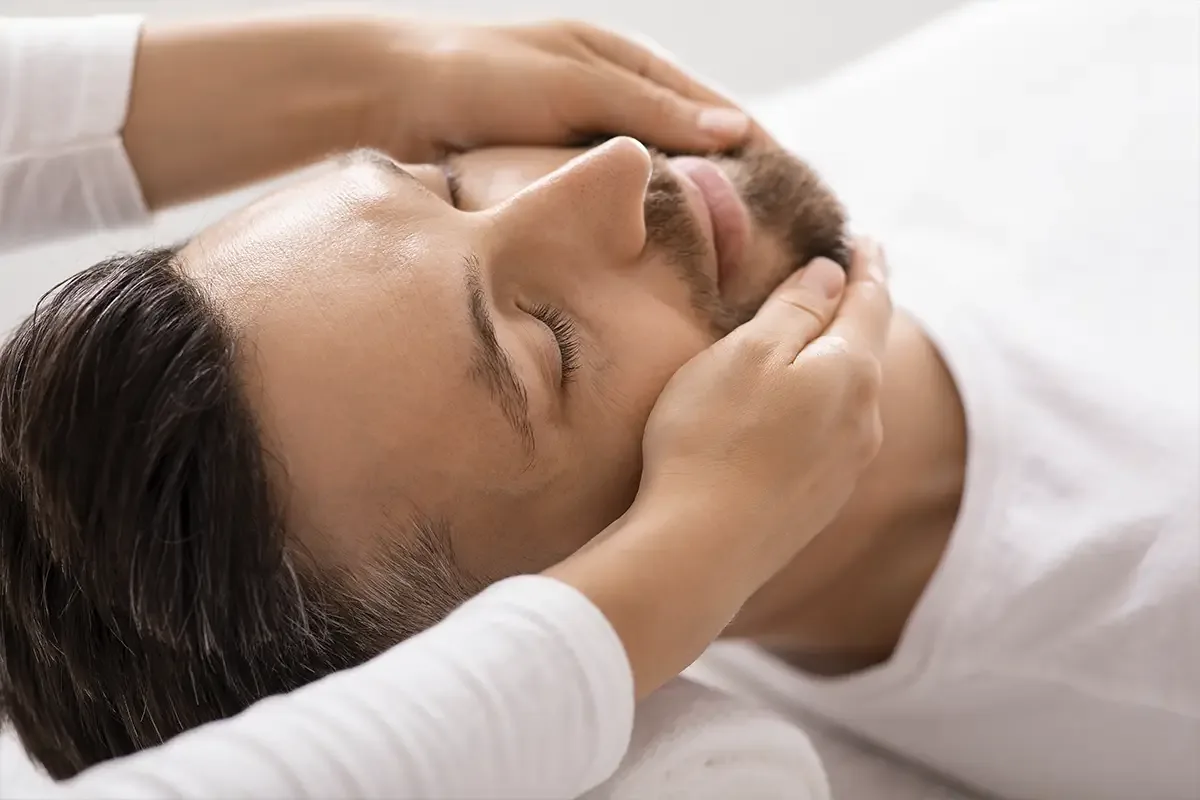
Treatment starts with a cause-first evaluation: how far and how straight the jaw opens, where it deviates on the way, what the chewing muscles feel like, how the upper neck moves, and what your day is asking of all of it. Where it hurts is not always why it hurts, and the jaw is a particularly good example of that.
If you already wear a night guard, bring it. If a dental cause is in the picture, we coordinate with your dentist, because a bite problem needs a dental answer and no amount of hands-on work substitutes for one. From there, care moves through four named phases, one-on-one with a licensed physical therapist, every visit.
Calm it down.
Hands-on work to the jaw and chewing muscles plus practical jaw rest strategies, starting the first visit. Most patients notice a meaningful difference within the first few sessions.
Restore what’s stuck.
Opening range and a straighter path of motion, along with the upper neck mobility that is often quietly limiting both.
Build strength you trust.
Control and endurance for the jaw, so a full meal and a long conversation stop being things you ration through the afternoon.
Make it stay fixed.
Retraining the daytime clenching habit, a home program short enough to actually do, and clear measures before you are cleared.
What does getting better look like?
People who book for jaw pain have almost always been living with it for a long time before they call. It is a small joint attached to a large amount of ordinary life: eating, talking, sleeping, and the afternoon at a desk where the clenching happens without permission.
Most patients notice a difference within the first two or three visits, since hands-on treatment starts at the evaluation itself. Progress tends to show up in the things you had quietly given up: waking without the temple headache, ordering what you actually wanted, yawning without the hand under your chin, getting through a long phone call without the ache setting in.
Left alone, jaw pain rarely stays confined to the jaw; the chewing shifts to one side, the neck starts carrying some of it, and the headaches usually arrive before anybody thinks to mention the jaw at all.
An evaluation turns that into a plan with a specific estimate, reviewed at every phase. If the headaches are now the bigger complaint, headaches and neck pain cover the neck side of the same story.
Which services treat TMJ and TMD pain?
Manual Therapy
Does most of the early work here: hands-on treatment of the jaw joint, the chewing muscles and the upper neck feeding both.
02Physical Therapy
Is the foundation: the cause-first evaluation and the four-phase plan that carries the jaw from irritated to reliable.
03Dry Needling
Targets the chewing and upper neck muscles that stay locked down after months of clenching and are not releasing with hands-on work alone.
04Orthopedic Therapy
Handles the joint mechanics side: how the jaw tracks as it opens, and what the top of the neck is contributing to it.
“Very professional and friendly staff. Through their knowledge and expertise on my specific injury, they made my recovery a very successful one! They were there every step of the way during the process from answering all my questions about my injury, questions about my post surgical procedure and recovery time. They really took the time and made me feel like family. I would recommend King Physical Therapy to my family and friends.”Lori C. · Patient review
Questions, answered plainly.
The things people ask on the phone about a sore jaw, written down.
Often both, and the split is fairly clean. Your dentist owns the teeth, the bite and the night guard, and a dental cause needs a dental answer. We own the joint mechanics and the muscles: how far and how straight the jaw opens, how the chewing muscles behave, and what the upper neck is contributing. If your evaluation points at a dental cause, we will say so and coordinate with your dentist rather than working around them.
Not necessarily. Clicking is common, and plenty of people click for years without pain or restriction. It becomes worth examining when it comes with pain, when the jaw catches or locks, when opening has gotten smaller, or when it changed recently. The evaluation measures those things rather than treating the click itself as the problem.
It often does, and the two work on different things. A night guard protects your teeth and can reduce the load from grinding overnight. It does not restore how far the jaw opens, retrain the daytime clenching habit, or address a stiff upper neck feeding the pain. Bring your guard to the evaluation so your therapist can see how you use it.
Most jaw plans are shorter than people expect, because much of the work is hands-on treatment plus habit change you carry through the day. Your therapist gives you a specific estimate at the evaluation and reviews it with you at every phase. If the pain is being driven by something dental, the estimate will say that too, because our timeline would then depend on your dentist's.
Start with a cause-first evaluation for your jaw.
Put it in writing.
Six short questions. A real person calls you back, usually within two business hours, with times that fit your week.
The people who end up filling this out are rarely in the worst pain of their life. They’re just done working around it, done picking the errand that doesn’t require the stairs. If that’s the stage you’re at, this is the part where you stop researching and start.
Consider it filed.
A real person will call you back, usually within two business hours, with appointment times that fit your week. Keep your phone nearby.
Can’t wait? Call (724) 628-7288 ⟶Two clinics. Same standard in both.
Connellsville and Scottdale, both fully staffed, both easy to park at. Come see either one before you commit, if you like.
Clinic 01 · Connellsville
Directions to Connellsville ⟶ (opens in a new tab)
Clinic 02 · Scottdale
Directions to Scottdale ⟶ (opens in a new tab)