

Connellsville, PA · Services
Cupping therapy in Connellsville.
Decompressive soft-tissue work that lifts tight tissue instead of pressing on it: one tool inside a cause-first plan with a licensed physical therapist, never an appointment on its own.
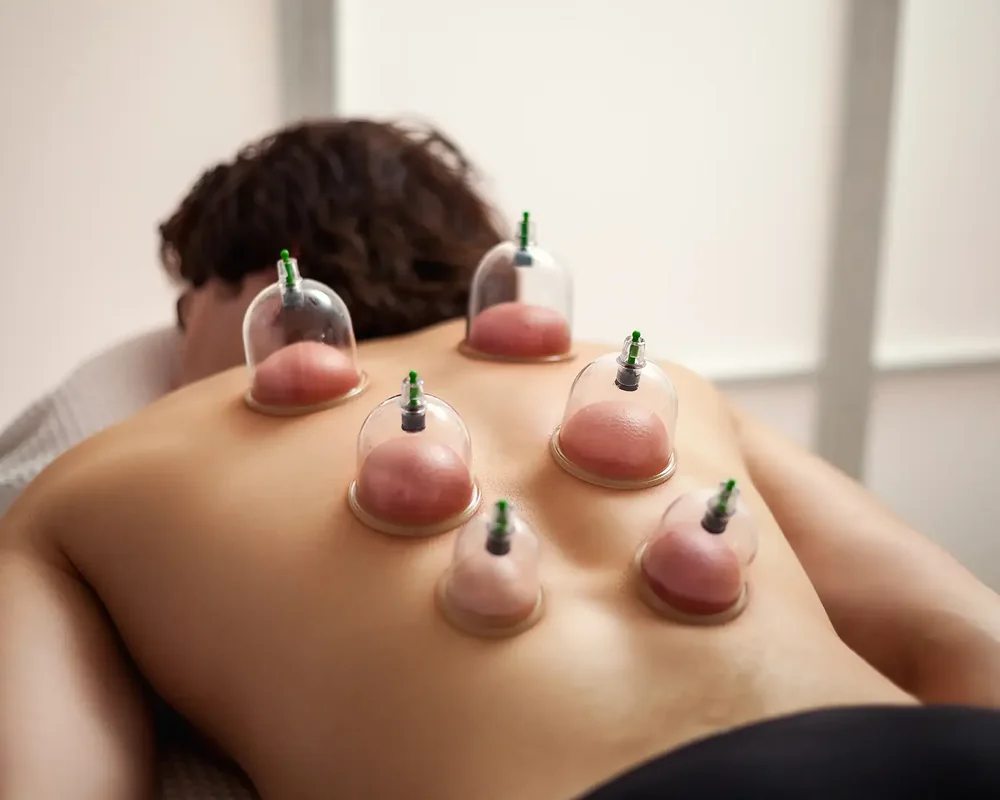
What is cupping therapy in Connellsville?
Cupping is soft-tissue work in reverse. Where a thumb or an elbow presses down into a tight area, a cup uses suction to lift the skin and the layers underneath it away from the tissue below. It is decompressive rather than compressive, and that is the whole point of reaching for it: some areas answer better to being pulled apart than pushed on.
Cups may be left in place over a guarded area for a few minutes, or glided along the length of a muscle with a little lotion so the decompression travels. Either way, it is aimed at broad, stubborn tissue rather than one tidy point, and it is commonly used to make an area more willing to move before the mobility work starts.
Cupping is adjunctive here, always. It sits inside a cause-first evaluation and a plan that runs through the four named phases, Pain, Prime, Perform, and Prevent, usually earning its place in Pain and Prime when tissue is guarding hard enough to block progress. It opens a window. The loading and movement work that follows is what makes the change hold. We would rather tell you that plainly than sell you a standing appointment.
One honest note up front, because people are surprised by it otherwise: cupping commonly leaves temporary round marks where the cups sat.
Calm it down.
Hands-on treatment begins at the first visit. You leave understanding what’s actually going on, and you feel a difference early.
Restore what’s stuck.
Targeted mobility work for the joints and tissue actually holding you back, dosed to your body, not a printed sheet.
Build strength you trust.
Progressive load against standards you have to clear before moving on. Confidence, here, is a training effect.
Make it stay fixed.
Testing before you’re cleared, then a keep-it-gone program sized to your real week. Then we graduate you.
What conditions does cupping therapy help with?
Cupping gets reached for when a broad sheet of tissue has gone stiff and protective, rather than when one small knot is the whole story. A sample of what it commonly supports:
Neck pain ⟶
The whole slab across the top of the shoulders that has been braced since the last long week.
02Shoulder pain ⟶
Tissue around the blade and the back of the arm that will not let the shoulder finish a reach.
03Back pain & sciatica ⟶
The broad low-back and glute tightness that a foam roller flattens for about an hour.
04Chronic pain ⟶
Long-guarded areas where anything pressing down is unwelcome and lifting is better tolerated.
Tissue that has been guarding for months does not usually settle by itself. It shortens your reach a little, then you stop reaching, then the shoulder stiffens because nothing has asked it to move to end range since February. The cups don’t fix that on their own. They make the area willing enough that the work which does fix it can actually start.
What does a cupping session look like?
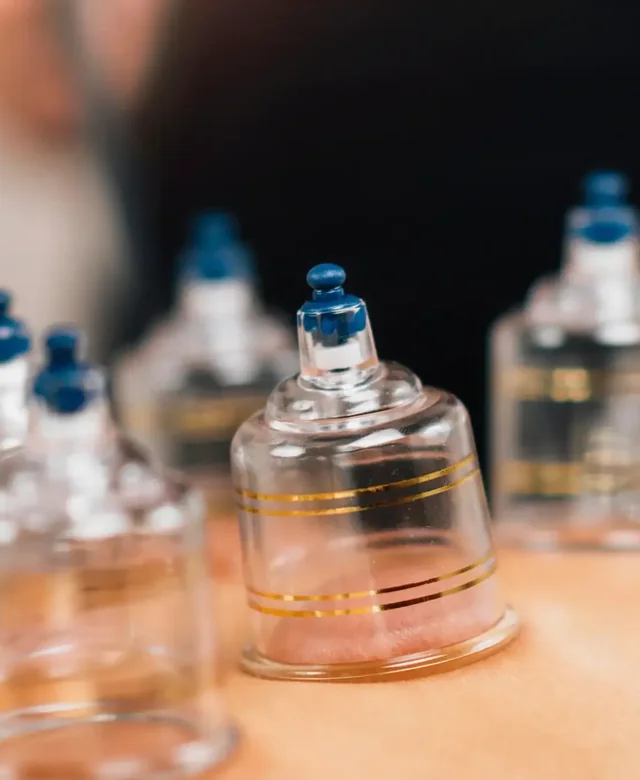
Cupping happens inside a normal visit, not as a separate booking. Your licensed physical therapist works out which area is actually limiting you, clears the skin, and applies the cups, either parked over a spot for a few minutes or glided along the muscle. The suction is adjustable and it gets adjusted, because the right amount is the amount you can breathe through.
Most patients describe a strong pulling sensation that eases in the first minute, then a warm, loose feeling in the area once the cups come off. That is the window. The rest of the visit spends it: mobility work, then loading, while the tissue is more willing than it was twenty minutes earlier.
Then the marks. Round, sometimes pink, sometimes a deep purple, and they can sit there for several days. They are not bruises from an impact, they are not a measure of how well it worked, and they are not a sign of injury. If you have a wedding on Saturday, tell us on Tuesday and we will plan the treatment around it.
Who this is for, and who it isn’t.
Cupping suits patients whose evaluation turns up a broad, guarded area rather than a single point, and patients who genuinely do not tolerate having that area pressed on. It also suits people who need something to change quickly enough that the mobility work in the same visit has a chance of landing.
If you have been putting up with a back that feels like a board and you’ve been quietly skeptical of anything that looks like a spa treatment, that skepticism is fair and you should keep it. Ask what it is supposed to do, ask what happens next in the same visit, and judge it by whether the rest of the plan moves faster. That is the right test.
It is not appropriate over open wounds, active skin infections, recent burns, or a fresh surgical site, and it is screened carefully for bleeding disorders, blood thinners, fragile skin, and pregnancy considerations. And if visible round marks for the better part of a week are a problem for your job or your calendar, that is a legitimate reason to choose something else. Say so, and we will.
Good fit
- A broad, guarded area rather than one small trigger point
- Tissue that tolerates being lifted better than being pressed on
- Part of an existing physical therapy plan, with loading work in the same visit
- Fine with temporary round marks for several days
Not the right fit
- Open wounds, active skin infection, recent burns, or a fresh surgical site
- Bleeding disorders, blood thinners, or fragile skin, screened at evaluation
- Pregnancy considerations your therapist reviews before anything is placed
- Anyone who needs the marks gone before an event this week
Physical Therapy ⟶
The cause-first evaluation and the plan the cups are borrowed into.
02Manual Therapy ⟶
Hands-on joint and tissue work, often in the same visit and on the same area.
03Dry Needling ⟶
For the specific, palpable trigger point that a broad technique will always underserve.
Cupping is adjunctive by design. It is one tool inside the plan, never a standalone treatment.
“Very friendly, knowledgeable staff. Therapists truly listen to problems and actively work to resolve them! Highly recommended!”Camille S. · Patient review
Questions, answered plainly.
It commonly leaves round marks, and they are worth knowing about in advance. They are not bruises from an impact and they are not a sign something went wrong. The color ranges from faint pink to a deep purple depending on the area and the person, and it typically fades over several days. If you have a wedding, a beach weekend, or a sleeveless dress on the calendar, say so and we will plan around it.
Most patients describe a strong pulling or stretching sensation rather than pain, and it eases within the first minute as the tissue gives. Moving cupping over a tight area can feel intense in the way a deep massage does. The suction is adjustable, your therapist checks in while the cups are on, and anything that feels sharp or burning is a reason to speak up and have them adjusted.
Not here. Cupping is used inside a physical therapy plan, after a cause-first evaluation confirms it is a reasonable tool for what is actually going on. It is adjunctive by design. On its own it may leave you feeling looser for a while, but it does not address why the tissue was guarding, and that is the part that decides whether the relief lasts.
As often as it is earning its place, and no more. Many patients have it during the Pain and Prime phases when a broad area of tissue is guarding and limiting the mobility work, then stop once the area is moving. Your licensed physical therapist decides visit by visit, and will tell you honestly when it has stopped adding anything.
Start with the evaluation that decides whether the cups belong.
Put it in writing.
Six short questions. A real person calls you back, usually within two business hours, with times that fit your week.
The people who end up filling this out are rarely in the worst pain of their life. They’re just done working around it, done picking the errand that doesn’t require the stairs. If that’s the stage you’re at, this is the part where you stop researching and start.
Consider it filed.
A real person will call you back, usually within two business hours, with appointment times that fit your week. Keep your phone nearby.
Can’t wait? Call (724) 628-7288 ⟶Two clinics. Same standard in both.
Connellsville and Scottdale, both fully staffed, both easy to park at. Come see either one before you commit, if you like.
Clinic 01 · Connellsville
Directions to Connellsville ⟶ (opens in a new tab)
Clinic 02 · Scottdale
Directions to Scottdale ⟶ (opens in a new tab)